Author: paedwards

Moments of Valor – Veral Harris Crowe: U.S. Marine

Veral Harris Crowe:  U.S. Marine

By Pat Edwards

In 1946, after spending 3½ horrifying years in a prisoner-of-war camp in Japan, Staff Sergeant Veral Harris Crowe stepped off of a plane in Hawaii and within 2 hours was reunited with his brother, Duane. Pvt.1st Class Duane Crowe had recently enlisted in the U.S. Marines and was stationed in Oahu at the Marine transient station awaiting further assignment. “Duane had no idea that Veral was alive or dead,” according to a newspaper article written by Staff Sgt. Jack C. Smith. “The last letter he had received through Japanese hands had been written in April of last year (1945) and delivered only 2 weeks ago.”

“On the chance that Veral might still be alive, and might some day be among the groups of repatriated allied military prisoners pouring through Hawaii on their way home, Duane left word to be notified with Red Cross workers…” They did, indeed, notify him and within 2 hours, he and the brother he had not seen for 5 years were reunited.

In 1996, Duane recalled, “When Veral and I finally met, my commanding officer said ‘Crowe, take my Jeep for as long as you want. Go wherever you want to, and if you can figure out how to drive it to the mainland, Fly at it!’”

Veral and Duane were the sons of Oral and Verona Crowe who at that time lived in Eugene. In 1853, the Crow(e) family was one of the original families to settle in Lorane, Oregon and they have a long and colorful history in the valley.

Veral Harris Crowe was born on September 26, 1920 in Lorane. He enlisted in the U.S. Marine Corps in January, 1939. He received training in San Diego, California as a high speed radio operator and in 1940, was shipped to Shanghai, China where he spent his first 2 years overseas. He had been on Corregidor as a member of the U.S. Marine garrison for only a couple of months when “the fortress was surrendered to overwhelming enemy forces on May 6, 1942.”

Smith, in his newspaper article, continued, “After his capture on Corregidor, Veral was held at Cabanatuan Prison on Luzon for 3 months, then transferred to Yokohama by way of Formosa and Kyushu. He remained at a camp near Yokohama until May, 1945, when he was transferred to the northern tip of Honshu to work in a steel mill. He was there when the war ended.

“Together with other repatriated allied military prisoners, Crowe was sent by ship to Guam after his liberation and from there, flown to Hawaii.”

Veral’s wife, June Crowe, said that Veral was still a patriot when released, but his Marine training was tested severely. Finding himself a prisoner-of-war demanded an extremely difficult and challenging adjustment, not only for just himself, but for all POW’s in similar situations.

“When Veral came home, he found a different place than he had dreamed of while in captivity, but he was eager to begin a new life.” Veral and June were married on January 1, 1946, following his return home. In March, Veral enrolled at the University of Oregon and graduated with a degree in Business Administration in 1948.

According to June, “He never forgot his buddies who did not make it, yet what he experienced as a POW, he rarely talked about. Youth’s spirit of competitiveness, lightheartedness, and bravado were deeply affected. War leaves scars that take longer than a lifetime to heal.”

June’s reflections on their marriage provides a thought-provoking finish to Veral’s military history. “It’s strange that I grew up with a Dad who was excused from World War I duty to care for his mother and the farm in Iowa, and a Mother who was a pacifist of Quaker heritage, that I should become the wife of a Marine. Well, life takes strange turns.

“Veral’s death in 1975 at the age of 54 was due to stomach cancer, compounded by grief. I will always be grateful that we had 30 years together. We shared many happy hours camping, hunting, and fishing. His ashes are now a part of the beautiful Pacific on Oregon’s Coast near Yachats, Oregon.”

Veral was posthumously presented with a Bronze Star and Commendations from both Presidents Truman and Ford.

Printed in Volume 3 Issue 4, Groundwaters Magazine, July 2007
Always and Forever

by Pat Edwards

In 1987. I submitted an entry in a contest called “Always and Forever” (the name of country singer, Randy Travis’, new album) sponsored by KUGN-FM radio in Eugene. My letter was chosen as the winner and Jim and I were treated to a wonderful evening at the Hult Center, meeting and visiting with Randy Travis in person on his tour bus for about 20 minutes. At the time, he presented me with a beautiful handcrafted gold necklace with an open umbrella as its pendant. A tiny diamond raindrop dangled from one of the spines of the umbrella and I wore that necklace for years afterwards.

This was my winning entry:

On Thanksgiving Day, 1983, the doctor entered my hospital room, looked at my husband Jim and me, and said something like this:

“‘The results of your ultrasound and other tests reveal that you have a large tumor on your left kidney, and after some further testing we must remove the whole kidney in two days time… There’s an 80% chance that the tumor is malignant… If it is encapsulated within the kidney itself, it can be treated. If not…’

I had been running a steady fever for seven days following a previous surgery, which had alerted the doctors that something else was wrong. That night, my temperature escalated to the point where the whole night was a hazy blur.

What I remember most about that night, was the presence of Jim beside my bed – always there when my parched mouth and throat needed a sip of water, or when the cold cloth on my forehead had turned warm and needed to be rinsed out once again. Those gnarled, calloused hands that built fences, roped cows, worked on engines, drove tractors and hauled merchandise for our store with a rugged strength, were as gentle as a baby’s as he ministered to my needs.

He stayed that night until the fever broke and I drifted into an exhausted sleep.

Each of the next two evenings before the scheduled surgery, he was in my room with a smile on his face and cards and flowers in his hands from people in the little community of Lorane where we lived. When he was with me, he never revealed the strain that I knew he was under. This was quite a feat in itself. This man that I had been married to for over 20 years was highly charged with nervous energy and was normally a very tense individual. I learned later from friends that away from the hospital he was considered a basket-case. But, he was always calm when he came to see me.

I credit a lot of the peace that I felt within myself those days before the surgery to the fact that I had always been blessed with the love of a good man and a family of whom I was very proud. I was ready and willing to accept whatever was to come my way, and Jim was there to support me.

It was Jim’s voice that I first heard through the fog of anesthesia that morning following the surgery… ‘It’s okay… It’s all right…The tumor was benign!’

The love has always been there – sometimes hidden by misunderstandings or selfishness on the parts of one or the other of us, but it is there. That love and support has given me the courage to not only face the possibility of death, but to realize that each of us must try to do something beneficial with our lives – to make each day count – Always and Forever.

Sweet Lorane Community Page, October 24, 2019

Fern Ridge Review
Creswell Chronicle
Sweet Lorane Community News
October 24, 2019
By Pat Edwards

Today, the day has finally arrived for Jim to have the epidural injection that will, hopefully, relieve him of the terrible sciatica pain that he has been experiencing ever since he fell and broke his pelvis in April. It has become so bad that he is barely able to get around, even with his walker.

I’ve lost so much faith in our healthcare system over this past year. Despite the disabling pain, Jim has had to wait over 4 months to even see a neurosurgeon to be evaluated, and then another month before the epidural could be scheduled. During that time, I had to take him to the ER just to get some relief from the pain. He won’t take opioids for pain relief, but the steroid treatment they put him on, while it relieved the pain for the time he was taking the pills, completely messed up his blood sugar levels. As a diabetic, this was part of the reason we had to make a second trip to the hospital and spend an overnight stay in September.

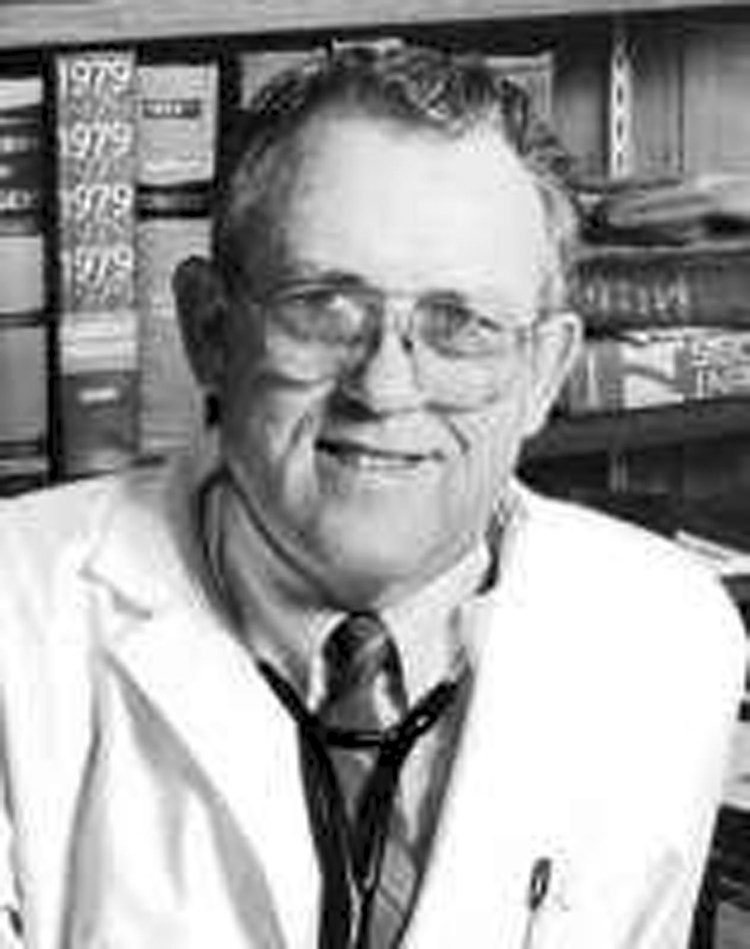
How I miss the days when I would call the office of our beloved Dr. Bylund, our family physician, and be told to come in that afternoon or, at the latest, the next day. When we got there, he greeted us by name. He had delivered each of our children and knew their histories as well as Jim’s and mine… not just medical histories, but he knew each of us as individuals.

The insurance covered our medical bills and we felt that our lives and our health were valued. Dr. Bylund was always there for us and involved himself in our medical care, even when a specialist was called in. He was there by my side as a gynecologist, who he had called in, performed a hysterectomy on me, and he was there a week later when my body developed a prolonged high fever. Afraid that the hysterectomy had developed an infection, he oversaw my care in the hospital and he fought to have me put on a cooling bed to get the temperature down before they were able to discover the cause of it. He fretted, seethed and was with me until an ultrasound found that I had a large tumor on my kidney that was the cause of the sudden fever. The hysterectomy had apparently set off the symptoms that caused the tumor to be discovered.

A urologist was called in and he informed Jim and me that there was an 80% chance that the tumor was malignant and the kidney would have to be removed. Dr. Bylund was there with me again during that procedure. Fortunately, I won the lottery, because the tumor was not cancerous and I am still here to tell you about it.

The point I am trying to make is that I miss that care and concern for me and my family’s medical well-being. Sure, we now have specialists who are much more prepared for what ails us, and I’m sure the younger generation is fine with being bounced around from one doctor to another and made to wait for weeks before they can get in to see their own doctor, but those of us who grew up with the Dr. Bylunds of the world, mourn their loss.

And, don’t get me started on the current way that insurance companies are allowed to limit doctors’ ability to diagnose and care for their patients on an individual basis. Our son has had excruciating pain in his neck and shoulder because of compressed disks in his neck for at least the past 3 years. He’s had one surgery to correct it after having to try physical therapy, chiropractic treatments, acupuncture and other non-invasive treatments at the insurance company’s insistence, but when they finally approved the first surgery, they denied the doctor the MRI which he felt he needed to pinpoint the origin of the pain. Consequently that surgery didn’t work for more than a month or so and Rob has been back to having to sleep in a chair and taking hot showers in the middle of the night to get some relief. Like his dad, he won’t take opioid pain-killers, either. After more than a year, his doctor has finally scheduled a second surgery in a different area of his neck to be performed in December, but his insurance company has denied it, saying he has to try more non-invasive procedures once again before they’ll approve it. The decision is being appealed, but witnessing the major pain that he has been in for at least 3 years now, has caused our family a great deal of heartache.

Where is human compassion and respect for the diagnosis of doctors who have spent their lives learning their jobs and trying to give their patients the best care possible? We are the ones paying the price.

Rest in peace, Dr. Richard K. Bylund (1926-2018) with much love from the Edwards’ family.

BYLUND_RICHARD_18_CC_02112018

Our beloved Dr. Bylund