By Pat Edwards
Finding the pot of gold called self-esteem at the end of life’s rainbow is difficult enough for those of us who only have to be concerned about what kind of makeup to wear, whether or not we can afford to eat a second piece of cake, or what our credit limit is on our Visa card. But for those among us who are faced with serious emotional, mental, or physical obstacles, that rainbow can seem alien and unapproachable, and its pot of gold out of reach.
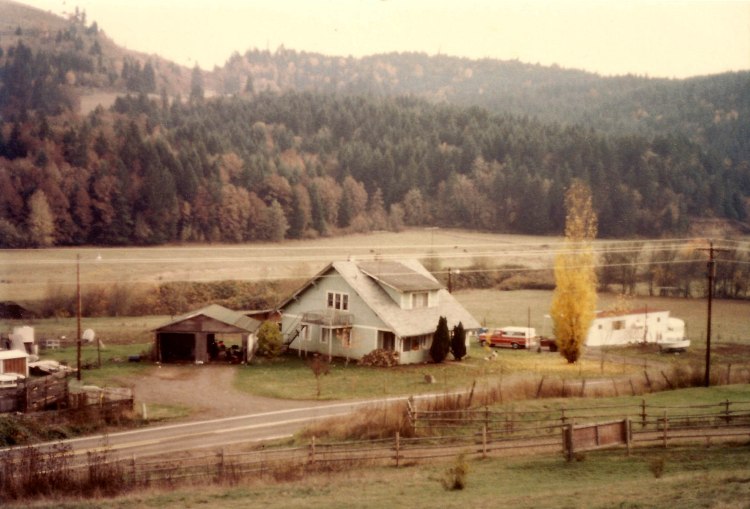
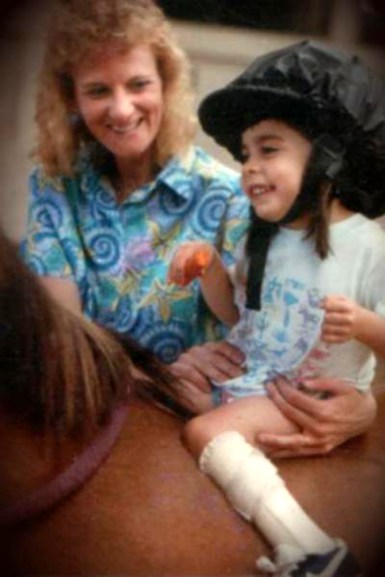 Children and adults alike are gradually attaining what must seem to them to be an impossible and, to many, an unrealistic goal. Children, especially, are being introduced to animal-facilitated therapy at Unicorn Spring Ranch, a nominee for the 1993 President’s Volunteer Action Award, located in the small rural community of Lorane, Oregon.
In 1990, with the help of a former graduate student, Dr. Hilary Cash, Russian-born psychologist Dr. Katarina Cernozubov-Digman moved her ranch to Lorane from Hawaii where they had discovered that their emotionally disabled patients responded better in the natural setting of a ranch. They found that, particularly for children, the cold, sterile environment of a medical office does not tend to promote the relaxed kind of setting in which trust can be established. In addition, they found that their patients were sometimes more easily able to establish that trust first in an animal. Many of the emotionally unstable soon discovered that by learning to control the behavior of a large animal, they began to gain control of their own behavior, as well.
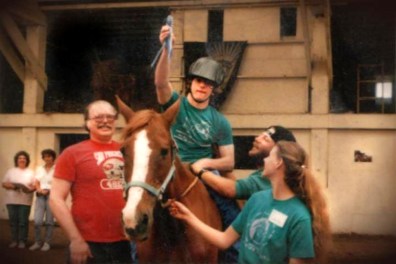 The idea for animal-facilitated therapy was developed some time ago from data which indicated that animals and humans have historically had a special and sometimes therapeutic relationship. There is evidence of the positive effects of introducing pets to long-term prison inmates, residents of convalescent homes, and people with high blood pressure. Horse therapy has been used for years with physically disabled people–the blind, the hearing impaired, those with cerebral palsy, muscular dystrophy, and other physical disabilities–but, through her work as a psychologist and a member of the Denver-based North American Riding for the Handicapped Association (NARHA), Dr. Digman is considered to be a pioneer in the use of horses for the emotionally disabled, as well.
According to Dr. Digman, “Horses are such big animals. If you feel helpless, like everything is out of control, this big creature is there to listen to you, like you, look forward to seeing you.
“Animals provide a lot of unconditional affection. You may have gotten an F on a test, but your dog is still glad to see you. They respond very honestly, so you know where you stand at all times.”
Funded by private contributions of cash, time, materials, and horses, Unicorn Spring Ranch is one of six centers affiliated with NARHA in Oregon and one of 450 in the U.S. There are only 36 accredited people in the United States who are trained and qualified to work with emotionally disabled children in this fashion. The fees are charged on a sliding scale based on the family’s ability to pay. Insurance companies are beginning to recognize and pay for these services as is the state justice departments, victim compensation programs, and county mental health organizations.
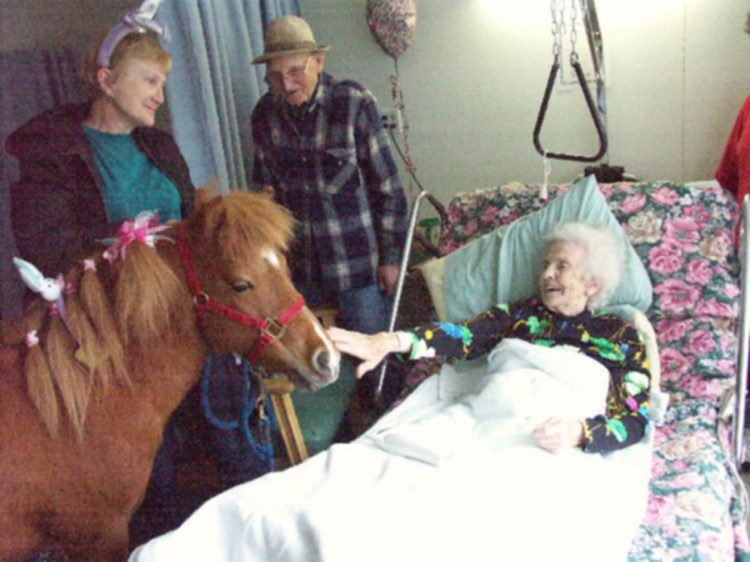
One of the Unicorn Ranch’s Outreach Programs… visiting nursing homes and senior centers with therapy ponies
Unicorn Spring Ranch is operated on a smaller scale than some other facilities, but the difference it makes to those who participate in its program is far from small. At least fifteen children and a few adults come to the ranch 2-3 times per week where they learn to care for and ride the sweet-natured, gentle horses that are made available to them. Most are able to form a bond with the horse or pony assigned them. They soon find that they are offered unconditional affection from the animals–something that some of the children have never experienced in troubled home environments. Their mutual experiences with riding, cleaning tack, and feeding opens a door of communication with not only each other, but with the therapists, as well. They soon learn how to make a friend, albeit a four-legged one, but frequently the lesson is eventually transferred to people, too. If the process works, the pot of gold begins to seem closer and, for some, even attainable. If the horses are, at first, too intimidating to some of the children, they usually find friends among the ducks, chickens, ferrets, cats, and dogs that are also available to them at the ranch.
Parents are enthusiastic about the program. Rob Tarver brought his son, Julian, to Unicorn Spring Ranch to see how its program might address Julian’s variety of problems including attention deficit syndrome, allergies, and speech and hearing problems. “Julian has learned its okay to make mistakes,” Tarver said. “There might be consequences, but he is still valued.”
Another parent told of the success the program has had on her four children ranging in ages from 6 to 13 in the year and a half that they have participated. The oldest child was extremely shy and withdrawn. She has since become a “super performer”, skipped two grades, and is doing great according to her teachers. Another of the children is now able to make friends more easily. A son has gained a great deal of confidence and, according to his mother, “is asking questions instead of being argumentative. My kids have had bad things happen to them. They are learning they are not responsible for what people did to them, and they are developing a sense of humor.”
One mother enrolled her son, who had behavior problems and trouble with his temper, in the program after having him in conventional therapy for over 5 years. During that time he had been put on various medications that never seemed to work. After 4 months in the animal-facilitated therapy program at Unicorn Spring Ranch, his mother has seen a “100% change” in her son. “He has learned a lot of self-control, is making friends, and is now off medication for the first time in about 6 years. He just loves it.”
Dr. Digman’s most dramatic success story, however, centers around a young boy in Hawaii who had witnessed the murder of his parents. The trauma sent the boy into a self-imposed world of silence which defied conventional therapy treatments.
According to Dr. Digman, “After a period of animal-facilitated therapy, the child began bonding with a horse. We began to hear him murmuring to it. We heard him say, ‘You don’t have a mom. I don’t have a mom. We can be friends.'”
The group therapy sessions at Unicorn Spring Ranch are usually 30-45 minutes long in which each emotionally troubled participant joins in group therapy and weekly reviews followed by games, drills, and other activities on horseback where each learns to communicate and strengthens his or her budding confidence, attention, concentration, coordination, cooperation, and memory skills. After the horses are cared for and put away, a group counseling session follows where verbal communications to build social skills are encouraged. Arts and crafts projects incorporating art and play therapies are frequently used individually or in groups as needed, as well.
Besides her patients with emotional disabilities, Dr. Digman also works with physically disabled kids and adults. Many whose legs and arms are stiffened by cerebral palsy or are atrophied from years of sitting in a wheelchair soon find that their worlds have expanded. The rigid muscles frequently relax, and they gain a new perspective from the back of a horse. The sense of freedom is no longer a concept. It becomes a reality. These students are aided by volunteers called “sidewalkers” who lead the horses and/or walk at the side of the horse to keep the rider squarely in the saddle.
Dr. Digman’s most successful physically challenged patient was a young woman who suffered from muscular dystrophy and could barely walk or speak. Other therapists had written her off as a lost cause.
Digman worked with the woman for four years. At the beginning of her therapy, the woman learned to ride a pony while being attended by three volunteer sidewalkers. She eventually graduated to riding the pony on her own. From there, she began riding larger horses, and, by the end of her therapy, was riding in horse shows. “Now,” Dr. Digman said, “the woman has been through speech therapy, has learned to take the bus around town, and holds a job.”
In a letter written to Dr. Digman, the young woman wrote of the benefits she felt she received in participating in the program. “I have learned to really like myself and feel proud of what I have accomplished. I feel that this program has given me the opportunity to develop and create a new self-image which is very positive. I now feel more like a “normal” person rather than a handicapped person that can’t fit with the rest of the world. My mind is more at ease. I feel less tense and more able to relax. Because of this, I feel very strongly that my mind has been stimulated and is now more active. I think more about many things and feel more free, not so ‘trapped’ by my handicaps. Another thing that happened is that I learned a new sense of self-awareness. I didn’t realize how much horses feel in response to me. Sometimes I would make my horse, Puma, angry. This taught me to be aware of myself and my behaviors, and to be more careful so I can get the response I want out of my horse and that, of course, has helped me to learn to relate to people in a more successful manner.
“Then the (horse) show! When I saw all those people–‘normal’ people, I was really scared. I was afraid of how I looked on a horse with my handicaps. I was really afraid of how they would be thinking of me. But, I learned to risk. I went in the show anyway, and all the people liked me! They applauded me! They accepted me! I felt so happy!”
One of Dr. Digman’s most loyal and experienced helpers is her daughter, Marusia, who is an accomplished horsewoman. Marusia and her Arabian horse, Daydreamer, are usually on hand to help in whatever capacity they are needed. She feeds the horses, exercises them, and helps to organize the drills that are used during the therapy sessions. As her mother’s assistant, Marusia also warms up the horses before anyone else mounts, helps to pair up a horse with a new ‘student’, and introduces people and horses in an informal environment.
Many of the horses that have helped to make life much brighter for the children and adults at Unicorn Spring Ranch were brought from Hawaii. The children call Puma the magical horse; Silky Rascal helped two students regain the desire to talk; Shadow is a pretty palomino with a sweet temperament; Popcorn, one of the ponies, has introduced many of the newcomers to the world of horses. Then there are True Lady who is always in one little girl’s prayers; and Silver who, according to one of her friends, is “special.”
The horses’ breed doesn’t seem to matter. Ideally, the horses used in the program should be abuse-free and gentle, but sometimes horses with troubled pasts have been beneficial. One of the ranch’s horses had been used for medical experiments before it was obtained for the program and it was a long time before it was able to trust anyone. Another one of the horses had been mistreated by previous owners and cowered in the corner of its stall when it was first brought to the ranch. The children frequently have been able to relate to the troubled pasts of their mounts, and it’s possible that such a horse can sense and relate to the tentative grasp of the small unsure rider on its back, as well.
According to NARHA guidelines, the type of horse being recruited for the NARHA programs across the country should possess “a quiet, spookproof attitude, smooth gaits, good manners and temperament, and physical soundness. Horses should not be younger than five years. No stallions, please. And if a horse is voice-trained, it gets a gold star. Potential horses are put through a series of tests at NARHA centers and must pass a probationary period before they are accepted.”
Human volunteers are also an essential part of the therapy process. At Unicorn Spring Ranch, they are sought as sidewalkers, but also to help with horse grooming, tack cleaning, exercising, transportation, games, correspondence, fundraisers, horseshows, ride-a-thons, campouts, and a multitude of other needed jobs.
Those who want more information about animal-facilitated therapy should contact the home office of the North American Riding for the Handicapped Association, P.O. Box 33150, Denver, Colorado 80233, or call (303) 452-1212. If you choose to become involved, you will be rewarded in the knowledge that you may have helped to bring a rainbow’s pot of gold within reach of a troubled child.
In the words of one little boy, “Horse therapy is horse riding, happiness, and feelings.”
ACKNOWLEDGMENTS
Capitol Press, Salem, Oregon, 1993
Cottage Grove Sentinel, Cottage Grove, Oregon, January 29, 1992
The Register-Guard, Eugene, Oregon, January 27, 1992
West-Lane News, Veneta, Oregon, February 10, 1994
Willamette Wrangler, Salem, Oregon, June, 1991
Published in From Sawdust and Cider to Wine, 2006
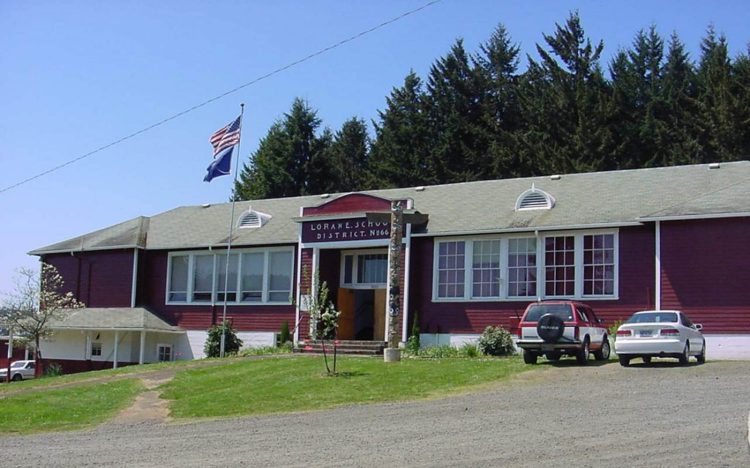
 All Things Lorane